
Duration
6 to 18 months
When to engage
You have a material or process and need to know if it works at scale.
Deliverables
Mix design report, trial monitoring data, constructability assessment, cost comparison memo, draft specification language.
For
Technology developers and material suppliers.
.jpg)
Lifecycle Assessments
Measuring embodied carbon across A1 to A5
-
Goal and scope definition, system boundary setting
-
Primary data collection from plants, contractors, and haul operations
-
ISO 14040/14044 conformant modelling
-
Cradle-to-installation assessment (A1 to A5)
-
Comparative baseline analysis against incumbent methods
-
Comparable data to support procurement and design decisions

Duration
3 to 6 months
When to engage
You have a proven method and need a defensible number.
Deliverables
LCA report, comparative baseline memo, data collection protocol.
For
Manufacturers, Buy Clean agencies, developers preparing for EPD or methodology work.

Environmental Product Declarations
Standardised documents for engineers, specifiers, and procurement
-
PCR-aligned Verified Environmental Product Declaration development
-
Embodied carbon performance communication for engineers, specifiers, contractors, and procurement teams
-
Third-party verification and review management
-
Recognised industry standard compliance
-
Integration with Buy Clean and green procurement specifications
Duration
2 to 4 months (following LCA completion)
When to engage
You need a procurement-grade document for your material or process.
Deliverables
Verified EPD (third-party certified), supporting documentation.
For
Manufacturers, agencies with Buy Clean requirements, specifiers.

Methodology Development
Building the quantification framework for registry crediting
-
Baseline and performance benchmark research
-
Additionality demonstration and documentation
-
Quantification formulae and emission factor development
-
MRV architecture definition (measurement, reporting, verification)
-
Registry submission package assembly
-
Public consultation and review process management
-
Scalable frameworks for carbon market participation
Duration
12 to 24 months
When to engage
You have a proven carbon delta and no existing crediting pathway.
Deliverables
Draft methodology, concept note, registry submission package, MRV protocol.
Track record
VM0039 (Verra, 2019), co-developed with University of Maryland and Build America Center. US Patent 10,870,953 B2.
Feasibility Studies
-
Evaluate material, process, or technology suitability for carbon accounting
-
Identify appropriate registry pathway and data requirements
-
Materials characterisation and mix design
-
Laboratory testing programmes
-
Field trial sections and instrumentation on live roads
-
Scale-up and constructability assessment
-
Equipment and contractor readiness review
-
Cost per lane-mile comparison vs. incumbent methods
-
Commercial viability assessment before committing to full methodology
Published assessments and declarations
Materials we have assessed, with lifecycle data and Environmental Product Declarations (EPDs) available.

Carbon Finance and Commercialisation
Turning verified attributes into market revenue
-
Project development, validation, and verification through Verra registry
-
Construction-season data collection and contractor onboarding
-
Offtake structuring and forward contract negotiation
-
Pricing strategy by vintage, channel, and buyer type
-
Buyer due diligence support (ratings, co-benefits, claims hierarchy)
-
Revenue allocation and contractor payouts
-
Reinvestment structuring and documentation
Duration
18 to 36 months (PDD to credit issuance), ongoing commercialisation.
When to engage
You have projects in the ground or hold verified environmental attributes.
Deliverables
PDD, issued VCUs, offtake agreements, pricing memo, co-benefits brief, buyer due diligence package.
For
Technology providers with active projects and carbon buyers.
Methodology Development
Building the quantification framework for registry crediting
-
Baseline and performance benchmark research
-
Additionality demonstration and documentation
-
Quantification formulae and emission factor development
-
MRV architecture definition (measurement, reporting, verification)
-
Registry submission package assembly
-
Public consultation and review process management
-
Scalable frameworks for carbon market participation
How carbon credits move the market
Cold recycling accounts for less than 2% of US asphalt production. The technology is proven and the economics benefit road agencies. Carbon finance provides the mechanism that closes the remaining commercial gaps and accelerates adoption across the country.
From funding to transformation

Measurable emissions delta
Against the incumbent method. We need primary data or a clear path to it.

Buildable with existing equipment
In the current market. We do not fund equipment development.

Cost within reach of public procurement
Must compete on cost-per-outcome with the incumbent.

Durability evidence or credible path
Confidence the environmental claim lasts beyond initial testing.

Replicable at volume
Across multiple states or contractors. Single-site pilots don't qualify.

Access to primary data
Direct or contracted access to plants, job sites, contractors.
First 90 days

01
Initial screen and data review
You share your material, process, and preliminary performance data. We assess feasibility and identify gaps.
O2
Scoping memo
We outline the realistic pathway, timeline, cost, and kill criteria upfront.
03
Engagement structure
If both parties agree, we propose a contract, milestone schedule, and governance model.
What we don't do
-
Fund equipment development or capital deployment
-
Develop proprietary methodologies you cannot control
-
Take equity or ongoing royalties beyond development fees
-
Guarantee credit purchasing. We connect projects and buyers, not guarantee demand.
-
Manage construction or serve as general contractor
Frequently asked
Carbon finance accelerates adoption during the transition period. Once your technology is standard, you've captured the market. That's the entire point.
As adoption grows, your market share expands. Carbon revenue grows alongside. Eventually, baseline tightening limits crediting, but by then you've won the market.
An accredited third-party verifier, independent of ClimatePave. They validate project design, monitor construction, and verify final performance. Registry record is public and permanent.
Yes. Methodology becomes a Verra standard available to the sector. Your technology, material formulation, process, and know-how remain yours. We don't require ownership transfer.
Feasibility validation: $50K to $200K
LCA/EPD: $30K to $80K
Methodology development: $150K to $400K
Financing is flexible. We structure shared investment with partners.
Three reasons:
-
Faster adoption (carbon finance closes the cost gap)
-
Market differentiation (verified credentials attract conscious buyers)
-
Revenue (you sell the environmental attributes alongside the technology)
-
01
Contractor adopts cold recycling
Equipment investment required; carbon finance offsets the margin gap
02
ClimatePave quantifies and verifies
VM0039 methodology, lab data, third-party Verra audit
03
VCUs issued and sold
Corporate buyers purchase verified carbon credits
04
Revenue returns to contractor
Direct payment funds equipment, training, and the next project
05
Adoption scales, specs catch up
New procurement specs, broader adoption, compound benefits across the industry
Carbon finance closes the contractor gap.
Cold recycling is cheaper for road agencies but requires significant equipment investment from contractors. The margin profile alone does not justify the shift away from established HMA workflows, where incumbent contractors operate with depreciated equipment, integrated supply chains, and a century-old lobby.
ClimatePave closes that gap. Verified carbon credits add a revenue stream tied directly to the emissions reduction a contractor delivers. Combined with project work, the economics support equipment investment and sustained adoption of the cleaner method.
Feasibility Studies
Evaluate whether a material, process, or technology is suitable for carbon accounting. Identify the appropriate registry pathway, data requirements, and commercial viability before committing to a full methodology.
Lifecycle Assessments
Measure the embodied carbon of construction materials across the complete A1 to A5 lifecycle. Our cradle to installation assessments provide comparable data to support procurement and design decisions.
Environmental Product Declarations
Develop standardised Environmental Product Declarations (EPDs) that communicate embodied carbon performance to engineers, specifiers, contractors, and procurement team.
Methodology Development
Where innovative technologies deliver measurable climate benefits but no recognised standard exists, we develop robust carbon accounting methodologies that enable scalable participation.
Carbon Finance
Verified credits sold to companies with Net Zero commitments. Revenue flows back to close the cost gap during early adoptions.
The methodology is the measurement. The credit is the mechanism. The road is the outcome.
Roads are essential infrastructure. Making them less resource intensive to build, more affordable to maintain, and capable of storing carbon represents one of the highest impact climate opportunities within the built environment. Carbon finance is a direct way to influence sectoral transformation.
Our Projects
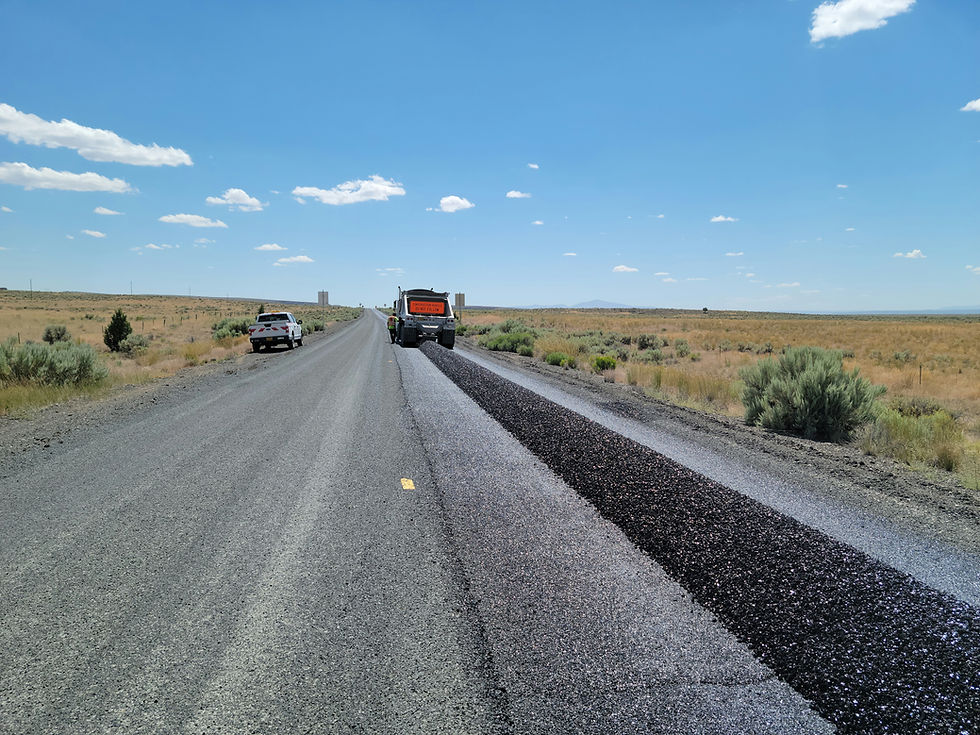
Measurable outcomes. Lower costs, fewer truck trips, extended road life, and emission reductions quantified and verified under VM0039 across diverse landscapes and conditions throughout the United States


.png)

Feasibility Studies
From initial evaluation through registry pathway identification
-
Evaluate material, process, or technology suitability for carbon accounting
-
Identify appropriate registry pathway and data requirements
-
Materials characterisation and mix design
-
Laboratory testing programmes
-
Field trial sections and instrumentation on live roads
-
Scale-up and constructability assessment
-
Equipment and contractor readiness review
-
Cost per lane-mile comparison vs. incumbent methods
-
Commercial viability assessment before committing to full
